
The Mangrove Forest Walk at Pete-Jozani, part of Jozani Chwaka Bay National Park, is one of Zanzibar’s quieter nature experiences, an elevated wooden boardwalk that winds through mangrove swamp on the edge of Chwaka Bay. As local experts at Kiwoito Africa Safaris in Tanzania, we arrange this outing for many guests, who tend to come away struck by the tangled roots, the still water below the walkway, and the general quiet of the setting.
The boardwalk crosses the main road from the forest section of the park, beginning under the shade of an old tamarind tree before continuing out over the tidal mangrove creek, with estimates of its length ranging from around one to two and a half kilometers depending on which section is walked. Along the way, a ranger guide explains how the mangrove roots filter salt from the water, stabilize the coastline, and serve as a nursery for young fish, crabs, and other marine life, forming part of a wider ecosystem that also supports dolphins and turtles further out in the bay. Fiddler crabs are a common sight scattering across the mud below the boardwalk, and the area is recognized by BirdLife International as one of Zanzibar’s better birdwatching sites, with species such as the mangrove kingfisher, various herons, and white-faced whistling ducks among those recorded here. The dappled light filtering through the canopy, combined with the general quiet of the walk, tends to make for an atmospheric stretch of the visit, particularly in the early morning or late afternoon.
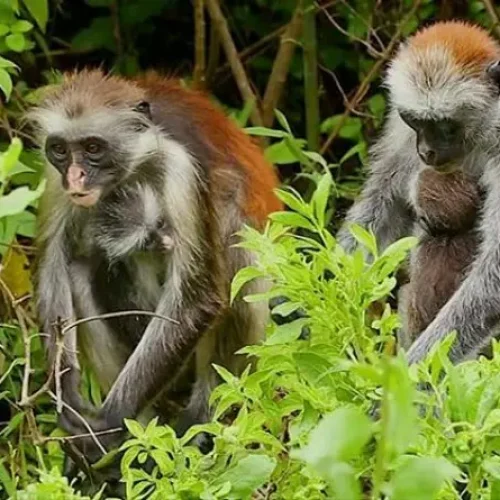
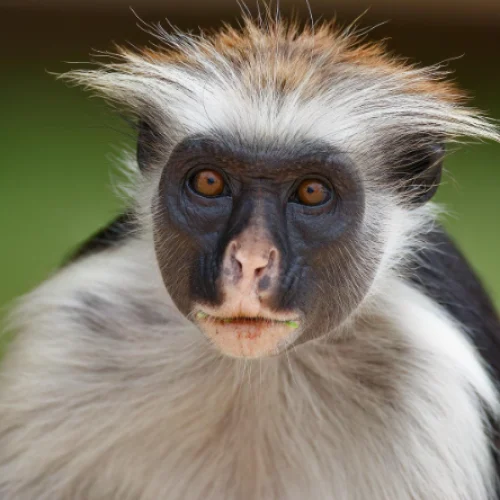
Whether paired with a look for Jozani’s red colobus monkeys, a spice tour, or a beach day after a northern Tanzania safari, the boardwalk itself generally takes one to two hours to walk at an easy pace, with the full outing, including transfers, running closer to three to five hours. It suits nature lovers, photographers, and families, since the path is flat and shaded and doesn’t involve any real physical effort.
A few things stand out about this particular stretch of the park. The boardwalk itself is flat and easy underfoot, which makes it accessible for most ages without any real hiking involved. The setting is genuinely different from the forest trail nearby, with the elevated path giving a clear view down into the tidal channels and root systems below. Because the mangroves support a wide range of small marine and bird life, a quiet, unhurried pace through the boardwalk tends to increase the chances of spotting kingfishers, herons, or crabs along the way. The area’s recognition as an important birding site also means keen birdwatchers can come away with a reasonable list of sightings, particularly with binoculars in hand. As a short, standalone stop or a natural add-on to a Jozani Forest visit, it offers a fairly different, calmer complement to the monkey trail.
Most visits start with hotel pickup, whether from Stone Town, the east coast beaches around Paje and Jambiani, or the north of the island, with the drive to Jozani generally taking forty five minutes to an hour. Park entry includes a ranger guide, and many visitors combine the boardwalk with time in the forest section looking for red colobus monkeys beforehand. To reach the boardwalk itself, the group crosses the main road from the forest area and begins the walk under the old tamarind tree that marks the entrance, continuing out over the mangrove creek at a relaxed pace while the guide points out root types, tidal patterns, and any wildlife encountered along the way. Guests are welcome to pause for photographs or to watch for birds and crabs, and bringing binoculars is worthwhile for anyone particularly interested in birdlife. The return transfer to the hotel typically brings the full outing to somewhere between three and five hours, with the boardwalk section itself generally taking one to two hours.
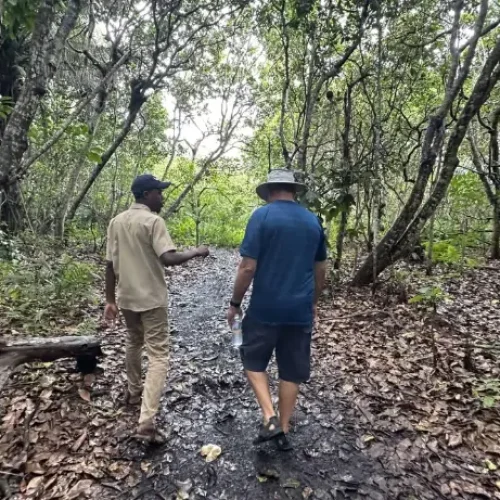
The boardwalk can be visited comfortably throughout the year, though early morning or late afternoon tends to bring cooler temperatures, fewer other visitors, and softer light for photos. It’s worth wearing comfortable closed shoes, since some sections can be damp, along with insect repellent, a hat, sunscreen, and water. A camera or binoculars are worth bringing given the birdlife and scenery, and a small amount of cash is useful for tips. Both shared and private tours are available, with private tours offering a quieter pace for those keen on birdwatching or photography. Prices typically range from about forty to seventy US dollars per adult including transfers, with the park entrance fee, which includes the ranger guide, generally around thirty thousand Tanzanian shillings.
The Pete-Jozani mangrove boardwalk offers a quieter, more atmospheric side of Jozani Chwaka Bay National Park, distinct from the forest trail and its red colobus monkeys. Many guests find the walk itself, with its still water and tangled roots, just as memorable as the more famous parts of the park.
Contact us at Kiwoito Africa Safaris for a personalized quote or timed booking, whether combined with Jozani’s red colobus monkeys, a spice tour, or the rest of your Zanzibar itinerary. As locals, we know the best times of day for light and for spotting wildlife along the boardwalk.
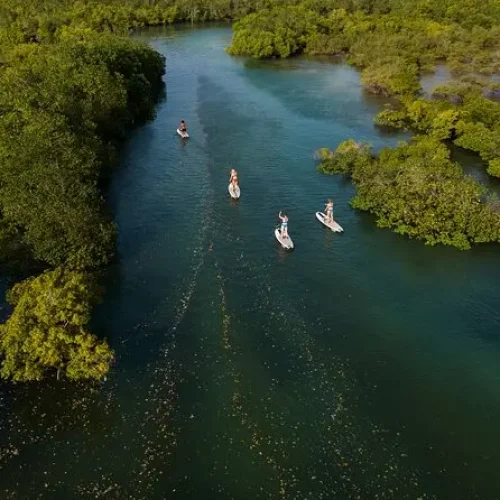
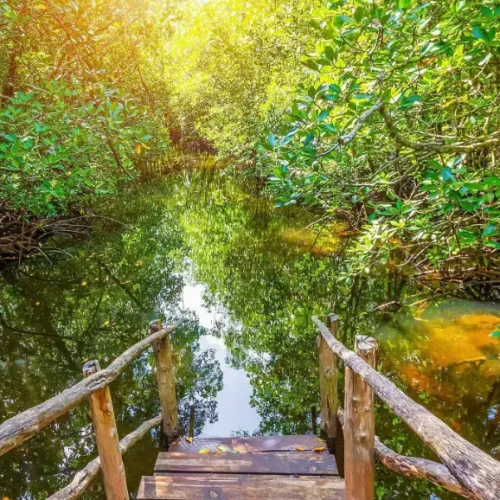
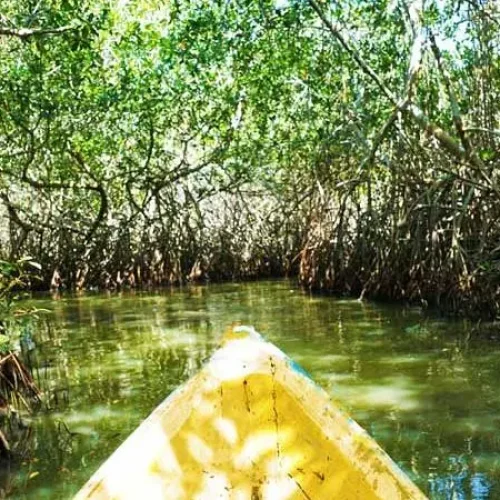
A Mangrove Forest Walk Zanzibar is a guided nature experience that allows visitors to explore Zanzibar’s coastal mangrove ecosystems while learning about their ecological importance. The walk takes travelers through wooden boardwalks, forest trails, and coastal areas where they can discover unique plant species, marine habitats, and the connection between local communities and mangrove conservation. Mangrove forests play an important role in protecting coastlines, supporting marine life, and maintaining the health of Zanzibar’s coastal environment.
Mangrove forest experiences are available in several coastal areas of Zanzibar, including locations around Jozani–Chwaka Bay National Park, Chwaka Bay, and other protected coastal wetlands across the island. Many visitors combine a mangrove walk with a Jozani Forest tour because the area contains both tropical forest and mangrove ecosystems.
During a Mangrove Forest Walk Zanzibar, visitors can observe different species of mangrove trees, coastal birds, crabs, fish, and other small marine organisms that depend on these ecosystems. A local guide explains how mangroves grow in salty environments, their role in protecting the coastline, and their importance to Zanzibar’s fishing communities.
Mangrove forests are essential coastal ecosystems that help reduce coastal erosion, provide breeding areas for fish and marine species, and protect communities from environmental changes. In Zanzibar, mangroves also support traditional activities such as fishing, crab harvesting, and sustainable community-based conservation projects.
Most Mangrove Forest Walk Zanzibar experiences last between 1 and 3 hours, depending on the location and itinerary. Short walks are suitable for travelers combining the activity with Jozani Forest, while longer guided experiences may include additional cultural or nature activities.
Kiwoito Africa Safaris organizes authentic Mangrove Forest Walk Zanzibar experiences that introduce travelers to one of the island’s most valuable coastal ecosystems. Our local guides provide insights into mangrove ecology, marine conservation, and the relationship between Zanzibar communities and their natural surroundings. Whether combined with Jozani Forest, cultural tours, snorkeling adventures, or a Tanzania safari extension, Kiwoito Africa Safaris creates meaningful experiences that showcase Zanzibar’s hidden natural treasures beyond its famous beaches.
Yes, when operated responsibly. Sustainable mangrove tourism supports conservation efforts by creating awareness about the importance of protecting coastal ecosystems. Visitors are encouraged to stay on designated paths, avoid disturbing wildlife, and follow guidance from local conservation experts.
The activity can be enjoyed throughout the year. The dry seasons from June to October and December to March often provide comfortable conditions for walking and photography. Morning and late afternoon walks are usually preferred because temperatures are cooler and wildlife activity can be more noticeable.
Visitors may encounter various coastal birds, mudskippers, crabs, small fish, and other organisms adapted to mangrove environments. While larger wildlife sightings are uncommon, the main attraction is discovering the unique ecosystem and understanding how different species depend on mangrove habitats.