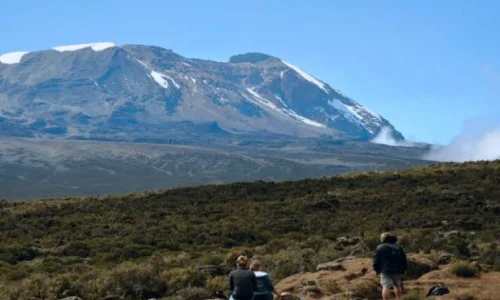
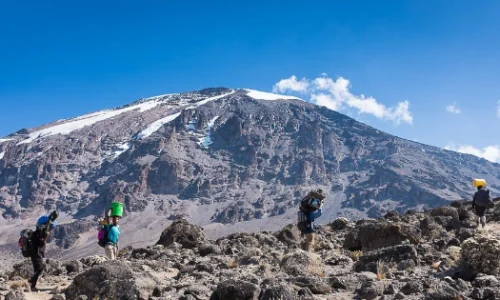
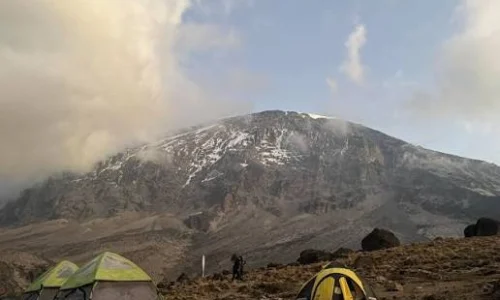
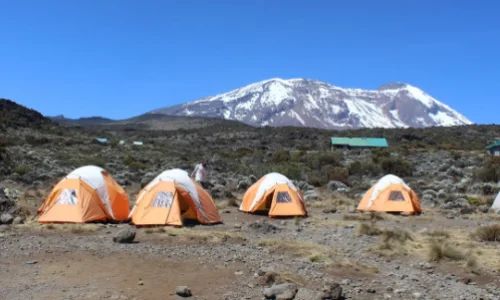
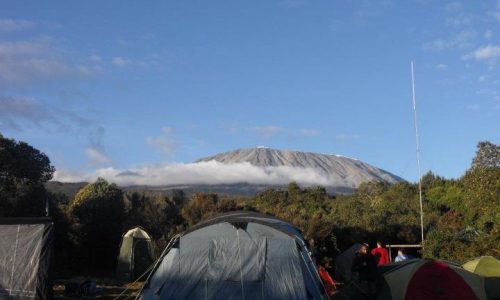
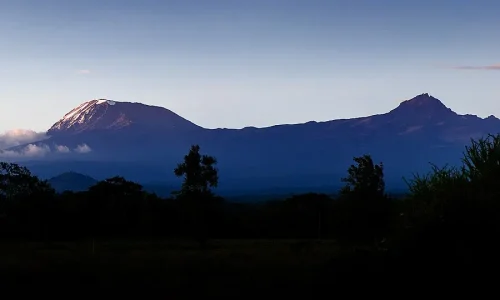
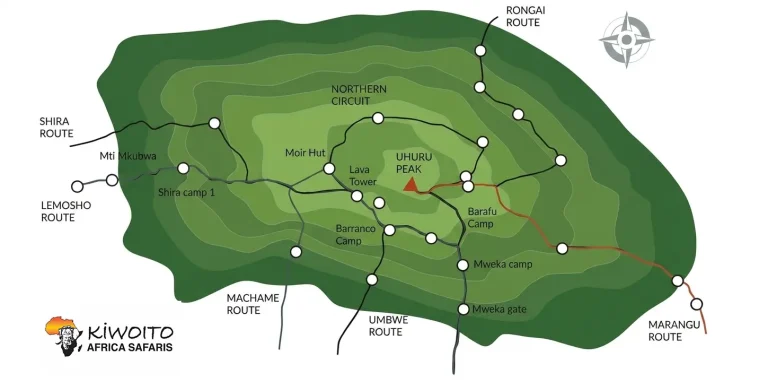
Imagine trekking up the northern slopes of Kilimanjaro under wide-open skies, with the vast plains of Kenya stretching far below and the mountain’s glaciers glowing in the distance. That’s the peaceful beauty of the Rongai Route, the only major path approaching from the north, close to the Kenyan border.
This 6-day Kilimanjaro climb starts at Nale Muru Gate (Rongai Gate), winding through gentle rainforest to moorland with terrific Kibo views, into semi-desert and alpine zones, merging with the Marangu Route at Kibo Huts for the classic summit push to Uhuru Peak (5,895m / 19,341 ft). You’ll cross five climate zones: lush rainforest, open moorland with thinning shrubs, semi-desert with closer ice field glimpses, alpine desert below the crater rim, and the stark, snowy summit.
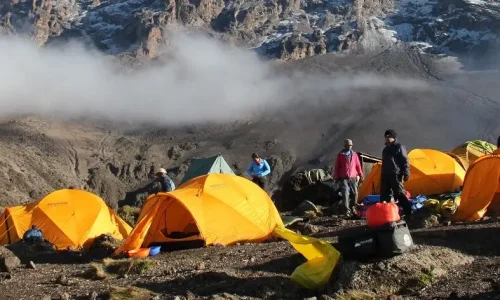
Rongai is drier than southern routes (less rain, fewer muddy sections), has fewer crowds for a more intimate feel, and offers a gentler early gradient, making it great for hikers wanting scenic variety and Kenyan-side panoramas. The 6-day version is faster-paced, so success depends on good fitness and our careful monitoring. No huts (tented camping throughout, except Kibo Huts area), just comfortable mountain tents, hot meals in our mess tent, and unwavering support from your crew. Our Arusha-based guides know Rongai’s northern trails intimately, watching for altitude signs, pacing you perfectly, and sharing local stories to make every day feel special and safe.
Best seasons: June–October and December–February for drier conditions and clearer summit views. If you’re seeking a quieter, drier approach with epic northern scenery and genuine Tanzanian hospitality, this 6 days Rongai Route Kilimanjaro climb is your perfect northern gateway to Africa’s roof.
Day 1
Arusha/Moshi to Nale Muru Gate – Simba Camp
Day 2
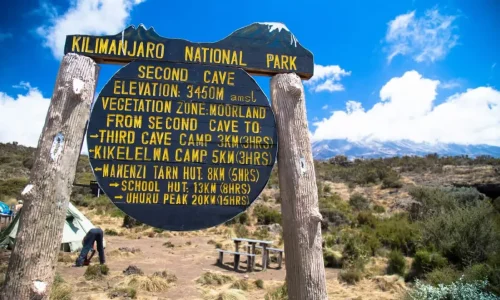
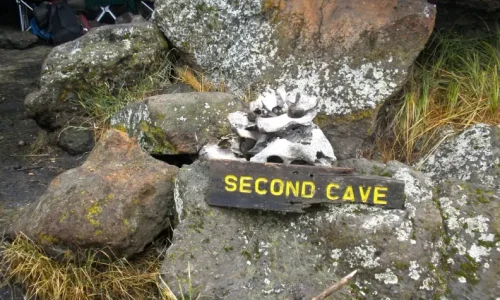
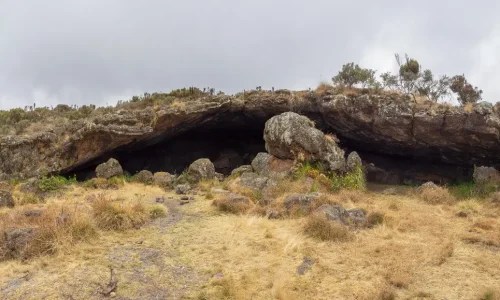
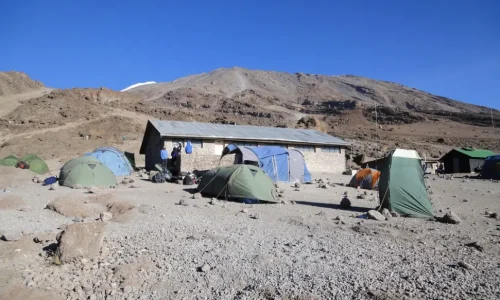
Simba Camp – Second Cave Camp
Day 3
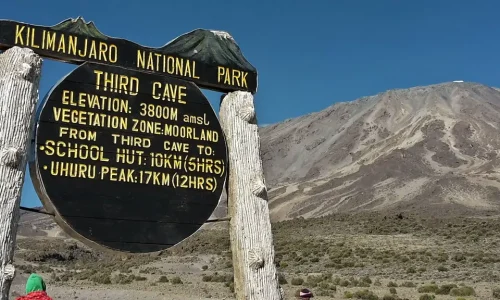
Second Cave Camp – Third Cave Camp
Day 4
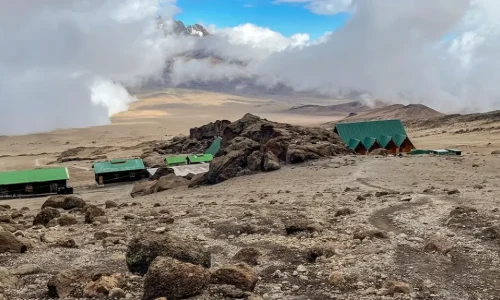
Third Cave Camp – Kibo Huts
Day 5
Kibo Huts to Uhuru Peak – Horombo Huts
Day 6
Horombo Huts to Marangu Gate – Arusha/Moshi
Your adventure starts with a scenic 4–5 hour drive from Arusha (or Moshi) through coffee plantations and the village of Nale Muru to Rongai Gate for registration. After meeting your warm crew, our certified local guides, porters, and cook, you enter the beautiful montane rainforest.
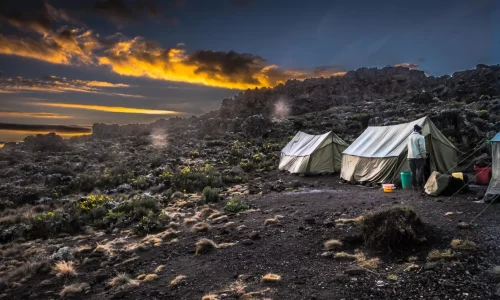
The trail winds gently uphill through wooded scenery, with bird calls and possible wildlife sightings. Your guide shares insights on local flora, fauna, and the mountain’s secrets. After 3–4 hours and ~7 km, reach Simba Camp (2,635m / 8,645 ft) at the edge of the moorland zone, enjoy spectacular views of Kenya’s plains at sunset.
Meal Plan: Breakfast, Lunch, Dinner
Elevation: 1,997m to 2,635m
Distance: ~7 km
Hiking Time: 3–4 hours
Habitat: Rainforest


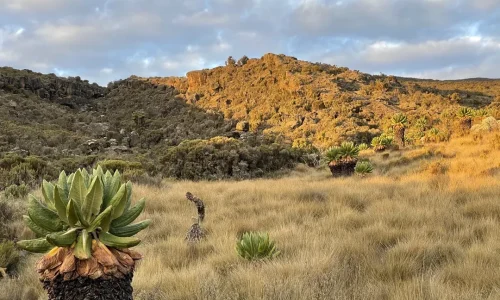
Wake to hot tea at your tent and a hearty breakfast with open views. Continue ascending steadily through moorland terrain, small shrubs thin out as you gain height.
Catch terrific glimpses of Kibo and the eastern crater’s ice fields. The air cools noticeably. After 5–6 hours and ~5.8 km, arrive at Second Cave Camp (3,487m / 11,440 ft), a peaceful spot with building mountain presence.
Meal Plan: Breakfast, Lunch, Dinner
Elevation: 2,635m to 3,487m
Distance: ~5.8 km
Hiking Time: 5–6 hours
Habitat: Moorland


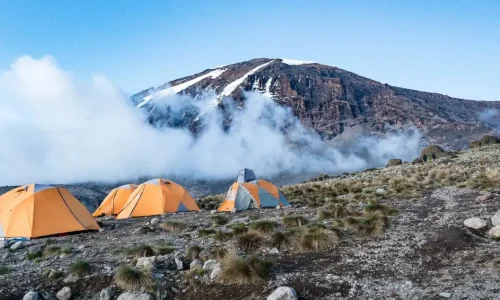
After breakfast, trek a shorter, steady ascent into semi-desert terrain. The landscape becomes barer, drawing your eyes to the eastern ice fields’ beauty.
This day (~3–4 hours, ~3.3 km) lets you focus on pacing and hydration, listen to your body and alert your guide to any altitude signs. Reach Third Cave Camp (3,936m / 12,913 ft) for rest and acclimatization prep.
Meal Plan: Breakfast, Lunch, Dinner
Elevation: 3,487m to 3,936m
Distance: ~3.3 km
Hiking Time: 3–4 hours
Habitat: Semi-Desert


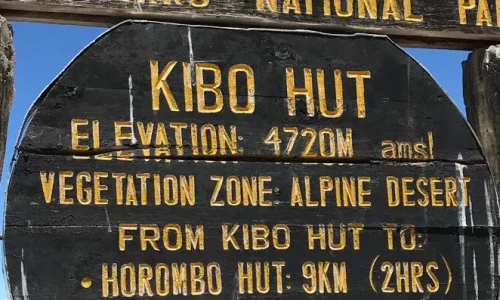
Depart early into alpine desert, sparse vegetation, rocky ground, and the crater wall looming closer. Trek steadily to Kibo Huts (5,174m / 16,975 ft), merging with the Marangu Route.
Arrive to prepare summit gear (check headlamp batteries, layer clothing). Eat early, rest by 7 PM, excitement builds for midnight start.
Meal Plan: Breakfast, Lunch, Dinner
Elevation: 3,936m to 5,174m
Distance: ~6.7 km
Hiking Time: 4–5 hours
Habitat: Alpine Desert


Midnight–2am wake-up with hot drinks, the most challenging part begins. Ascend through heavy scree between Rebmann and Ratzel glaciers in switchbacks toward Stella Point (5,756m).
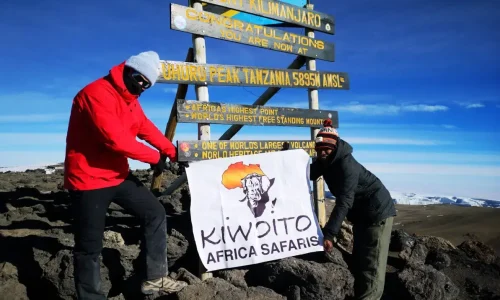
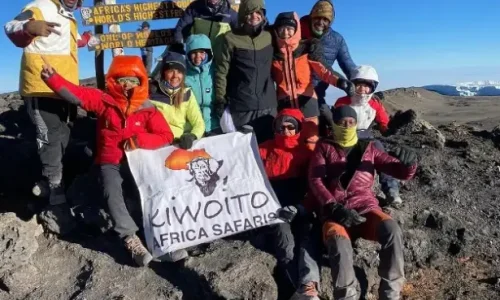
Dawn rewards you with a magnificent sunrise over Mawenzi. Short rest, then ~1 hour to Uhuru Peak (5,895m / 19,341 ft), celebrate on Africa’s roof amid possible snow!
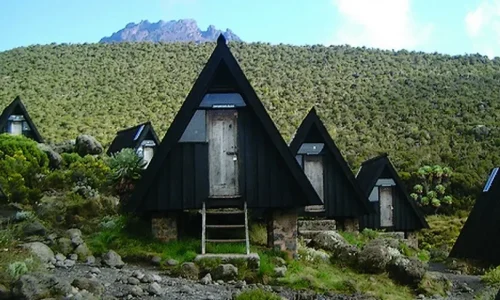
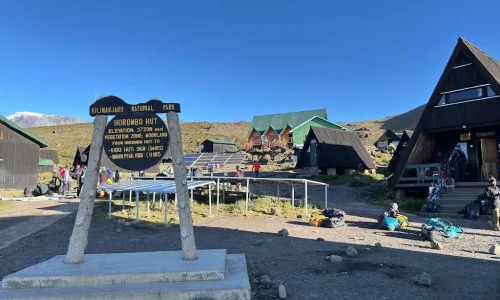
Descend to Barafu for brief rest/lunch, continue to Horombo Huts (3,721m / 12,208 ft) for well-earned rest. Use gaiters/poles on loose gravel.
Meal Plan: Breakfast, Lunch, Dinner
Elevation: 5,174m to 5,895m to 3,721m | Distance: ~4 km up + ~15.75 km down | Hiking Time: 5–7 hrs up + 5–6 hrs down
Habitat: Glaciers, Snow-Capped Summit to Moorland/Rainforest


After breakfast and a heartfelt crew appreciation ceremony, descend through moorland to rainforest, wet, muddy, steep lower down (gaiters/poles recommended).
Stop at Mandara Huts for lunch, continue to Marangu Gate (~6–7 hours, ~20 km). Collect summit certificates, thank your team (tips appreciated), and transfer back to Arusha/Moshi for a hot shower and celebrations.
Meal Plan: Breakfast, Lunch


We’re proudly Arusha-based and locally owned, Kilimanjaro is our backyard. Our guides hold NOLS USA Wilderness First Responder certification and know Rongai’s northern trails intimately: monitoring altitude on the drier ascent, pacing for success, and keeping spirits high with encouragement and stories.
We emphasize responsible tourism, fair porter treatment, eco-friendly practices, quality meals, and safety gear. Climbers love our personalized service: honest route advice, tailored pacing, and authentic Tanzanian warmth big operators miss. With 5-star ratings (Tripadvisor 5.0 | 200+ reviews, Google 4.9 | 100+ reviews), we deliver strong success on northern routes like Rongai.
This 6-day Rongai Route, drier, quieter, with northern views, offers a beautiful, less-crowded path to Uhuru. Private or small group, fully supported. Contact us today for a free personalized quote, gear tips, or availability. Let’s make your northern summit adventure happen!
| PAX | 1 PAX | 2 PAX | 3 PAX | 4 PAX | 5 PAX | 6 PAX |
| Price | on request | on request | on request | on request | on request | on request |
The trek can be undertaken safely with a professional mountain guide, proper preparation, suitable equipment, and careful altitude management. Trekkers should follow their guide’s instructions and immediately report symptoms of altitude sickness.
Most international visitors need a Tanzania tourist visa, although requirements depend on nationality. Eligible travelers can apply through Tanzania’s official online visa system. Your passport should generally have at least six months’ validity and one unused visa page.
Essential equipment includes good hiking boots, waterproof clothing, warm layers, a sleeping bag, trekking poles, headlamp, gloves, hat, water bottles, and a daypack. Warm summit clothing is particularly important because temperatures can fall below freezing.

The most popular trekking periods are generally January to March and June to October. These months often provide favorable conditions, although weather on Kilimanjaro can change quickly at any time of year.
The Rongai Route Kilimanjaro approaches the mountain from the northern side near the Kenya border. It is known for quieter trails, gradual slopes, and a different landscape from the southern routes.
Yes. The Rongai Route leads to Uhuru Peak, the highest point of Mount Kilimanjaro at 5,895 metres (19,341 feet) above sea level. The summit attempt usually begins from Kibo Camp during the night or early morning.
Yes. The Rongai Route can be suitable for first-time Kilimanjaro trekkers who are physically fit and properly prepared. Its gradual early ascent can make it more manageable than some steeper routes, although altitude remains a major challenge.
Yes. A 6 Days Kilimanjaro Trek via Rongai Route is possible and follows a relatively direct itinerary to the summit. However, six days provides less acclimatization time than longer Rongai itineraries, so good preparation and a steady pace are important.
The Rongai Route is considered moderately challenging. It generally has a gradual ascent during the first days, although the final summit section is demanding because of the altitude and long hiking hours.