
The Rongai Route, sometimes called the Nalemoru Route, is the only major trekking path that approaches Mount Kilimanjaro from the north, close to the border with Kenya. This gives it a distinct character compared to the busier southern and western routes, offering a quieter, more remote experience of the mountain.
The route begins gently on the drier northern slopes at around 1,950 meters (6,400 feet), near the village of Nalemoru. From there, it climbs steadily through farmland and dry forest before entering moorland and alpine desert. Climbers cross the wide saddle between Mawenzi and Kibo before joining the Marangu Route near Kibo Hut, at roughly 4,700 meters (15,410 feet), for the final push to Uhuru Peak at 5,895 meters (19,341 feet). Descent is usually made via the Marangu Route, meaning trekkers walk new ground for almost the entire journey rather than retracing their steps.
One of the main draws of the Rongai Route is how quiet it is, particularly during the first four to five days, which gives the trek a peaceful, wilderness-like feel. This is partly due to its remote northern starting point and partly because it sees far fewer climbers overall than routes like Machame or Marangu, even though its popularity has grown somewhat in recent years, especially during the busy August to October season.
The northern slopes also receive noticeably less rainfall than the southern side of the mountain, which makes Rongai a sensible choice during the rainy seasons of April to May and November, when other routes can become muddy and difficult underfoot.
The ascent itself is considered one of the more gradual and forgiving on the mountain, with fewer steep sections than routes such as Machame or Umbwe. This steadier gradient makes it a reasonable option for climbers who prefer a more even pace, though it still demands a good level of fitness and determination, as with any Kilimanjaro climb.
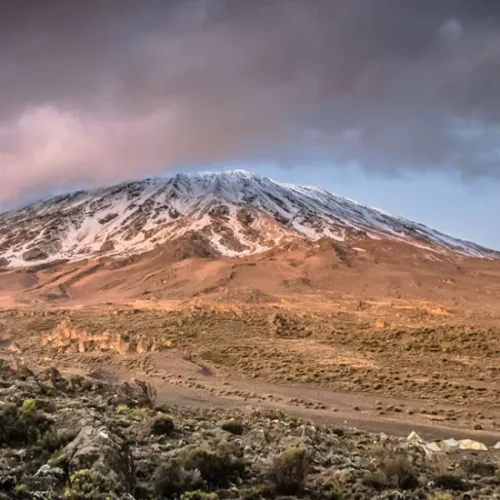
The lower forest zone on the northern side also offers a reasonable chance of spotting wildlife, including colobus monkeys and various birds, along with occasional sightings of elephants or buffalo. Further up, the route provides striking views of Mawenzi’s jagged peaks and the open plains stretching north toward Kenya, angles that climbers on the southern routes rarely see.
Rongai is a camping-only route, with porters carrying gear so that climbers can focus on the walk itself. On the question of summit success, most established operators report a six-day itinerary achieving success rates somewhere in the range of 50 to 75 percent, while the seven-day itinerary, which allows for an additional acclimatization day, tends to reach closer to 80 to 90 percent. This is one of the clearest reasons operators generally recommend the seven-day version over the shorter six-day option.
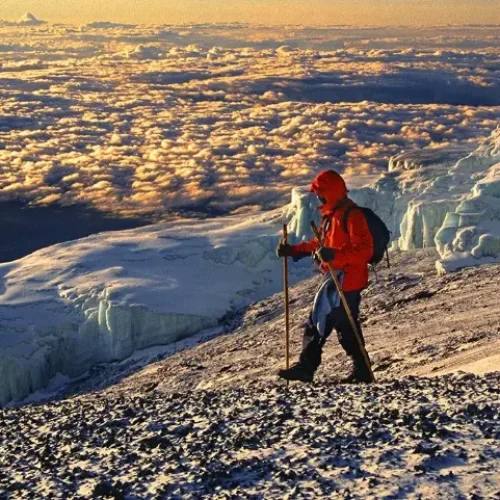
The trek starts at Rongai Gate, also known as Nalemoru Gate, on the northern side of the mountain, approximately three to four hours by road from Arusha. The total distance covered is around 73 kilometers (45 miles), making it one of the longer routes despite its gentler daily gradients. Most climbers spend six to seven days on the mountain, with seven days strongly recommended for better acclimatization and a higher chance of reaching the summit. Descent typically follows the Marangu Route, using its hut-based system, though a descent via the Mweka Route is sometimes arranged for those who prefer to camp on the way down.
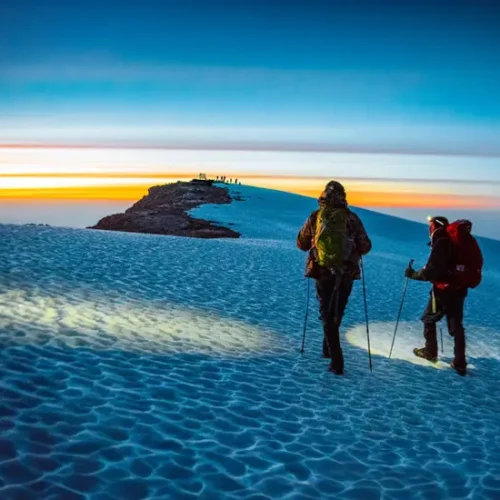
Highlights along the way include the quiet northern rainforest, where wildlife sightings are reasonably common, followed by a steady climb through moorland and alpine desert. Crossing the wide saddle between Mawenzi and Kibo offers some of the most dramatic views on the route, and the trail’s convergence with the Marangu path near Kibo Hut marks the beginning of the classic summit night, which follows the same final stretch used by climbers on the Marangu Route.
January through March brings warmer temperatures, clearer skies, and generally lighter crowds. June through October is the main dry season, offering the most dependable weather, and while this is the busiest period on the mountain overall, Rongai tends to remain comparatively quiet even at this time of year. December through February also offers favorable conditions with moderate crowd levels.
Rongai holds a particular advantage during the long rains of April and May, and again in November, since its northern position keeps it drier than the southern routes during these months.
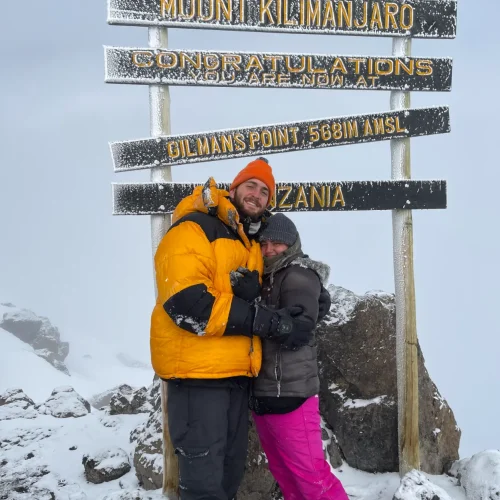
As an Arusha-based, locally owned operator, we guide the Rongai Route often and know its northern terrain well, including its particular weather patterns and the pacing that works best for a steady ascent. Our certified guides monitor altitude closely, carry emergency oxygen and pulse oximeters, and keep groups small so that each climber gets proper attention. We also ensure fair wages and good working conditions for our full mountain crew, and we follow responsible tourism practices to help protect this UNESCO World Heritage site.
Travelers choose us for genuine Tanzanian hospitality, direct support from our Arusha office, flexible trip customization, and a real commitment to safe, successful summits with proper celebration at Uhuru Peak.
The Rongai Route offers solitude, drier weather, a gentler gradient, and strong summit success rates, making it a good fit for climbers seeking a peaceful, less crowded route up Kilimanjaro.
Contact us today for a free personalized quote, a detailed gear list, training advice, or to combine your climb with a safari in Serengeti, Ngorongoro, or Tarangire.
Pole pole we’ll guide you to the Roof of Africa.
The Kilimanjaro Rongai Route Trek is a trekking route that approaches Mount Kilimanjaro from the northern side near the Kenya border. It is known for its gradual early ascent, scenic landscapes, and quieter trails compared with some of the more popular routes.
The Rongai Route is considered moderately challenging. The early sections are generally gradual, but the final ascent to Uhuru Peak is physically demanding because of the high altitude, cold temperatures, and long summit-day hike.
The Rongai Route can be completed in approximately 6 to 8 days, depending on the itinerary and acclimatization plan. Longer itineraries provide more time to adjust to altitude and can be more comfortable for many trekkers.
Yes. The Rongai Route can be a good option for beginners who have prepared properly and are physically fit. Its gradual initial ascent can be easier to manage than some steeper Kilimanjaro routes, although altitude remains an important challenge.
Most international visitors need a Tanzania tourist visa, although requirements vary by nationality. Eligible travelers can apply through Tanzania’s official online visa system. Your passport should generally have at least six months’ validity and one unused visa page before traveling.
Yes, the trek can be undertaken safely with a professional mountain guide, appropriate equipment, good physical preparation, and proper altitude management. Trekkers should follow their guide’s instructions and report symptoms of altitude sickness immediately.
Kiwoito Africa Safaris can organize your Rongai Route trek with experienced mountain guides, porters, accommodation, meals, park permits, transfers, and pre-trek preparation. We can also help you select the appropriate number of trekking days based on your experience and acclimatization needs.
Yes. The Rongai Route leads to Uhuru Peak, the highest point of Mount Kilimanjaro at 5,895 metres (19,341 feet) above sea level. The summit attempt normally begins from Kibo Camp in the early hours of the morning.
The route approaches Kilimanjaro from the north, providing different scenery from the western and southern approaches. It also tends to be quieter in the early stages and passes through areas with distinctive vegetation and views toward Kenya.